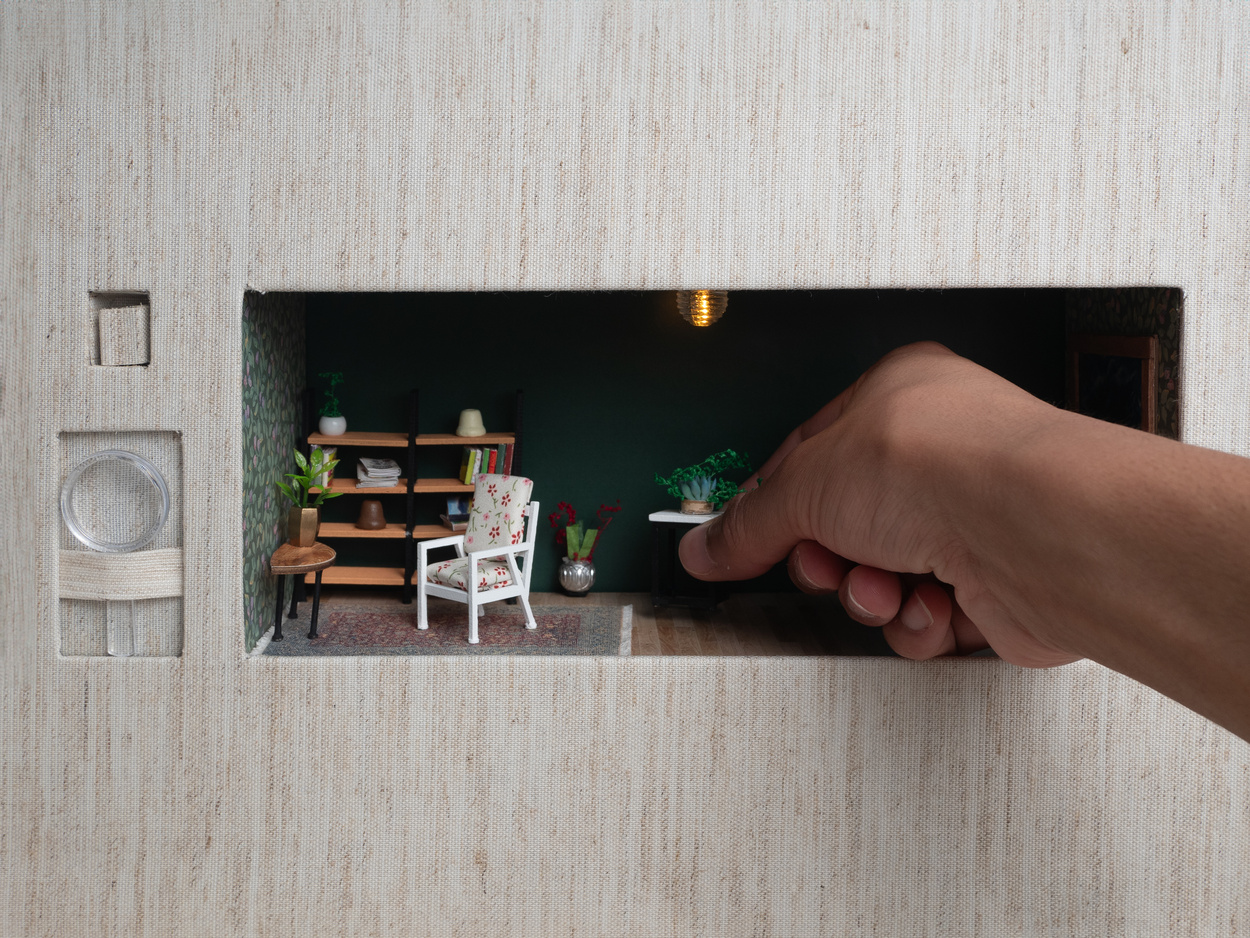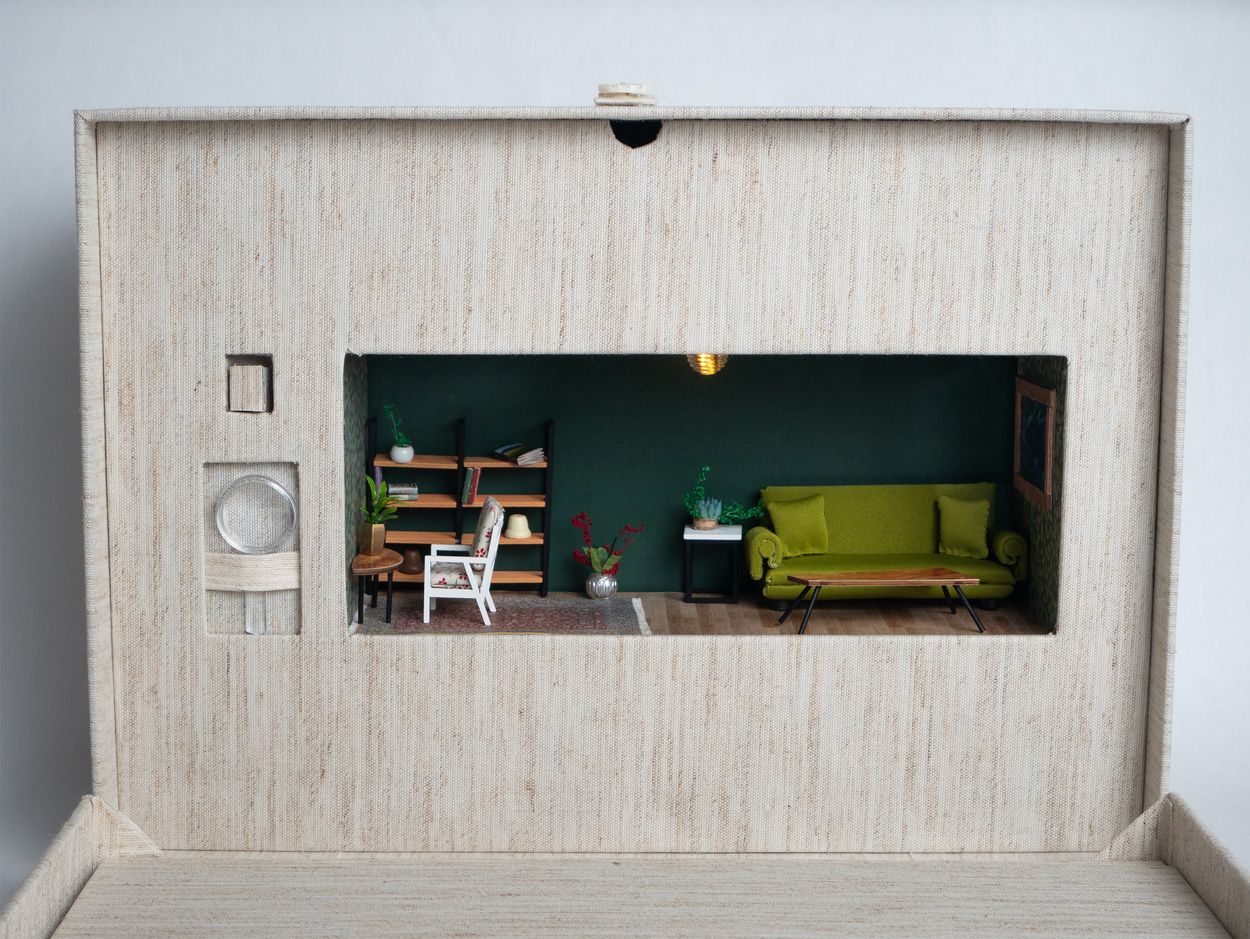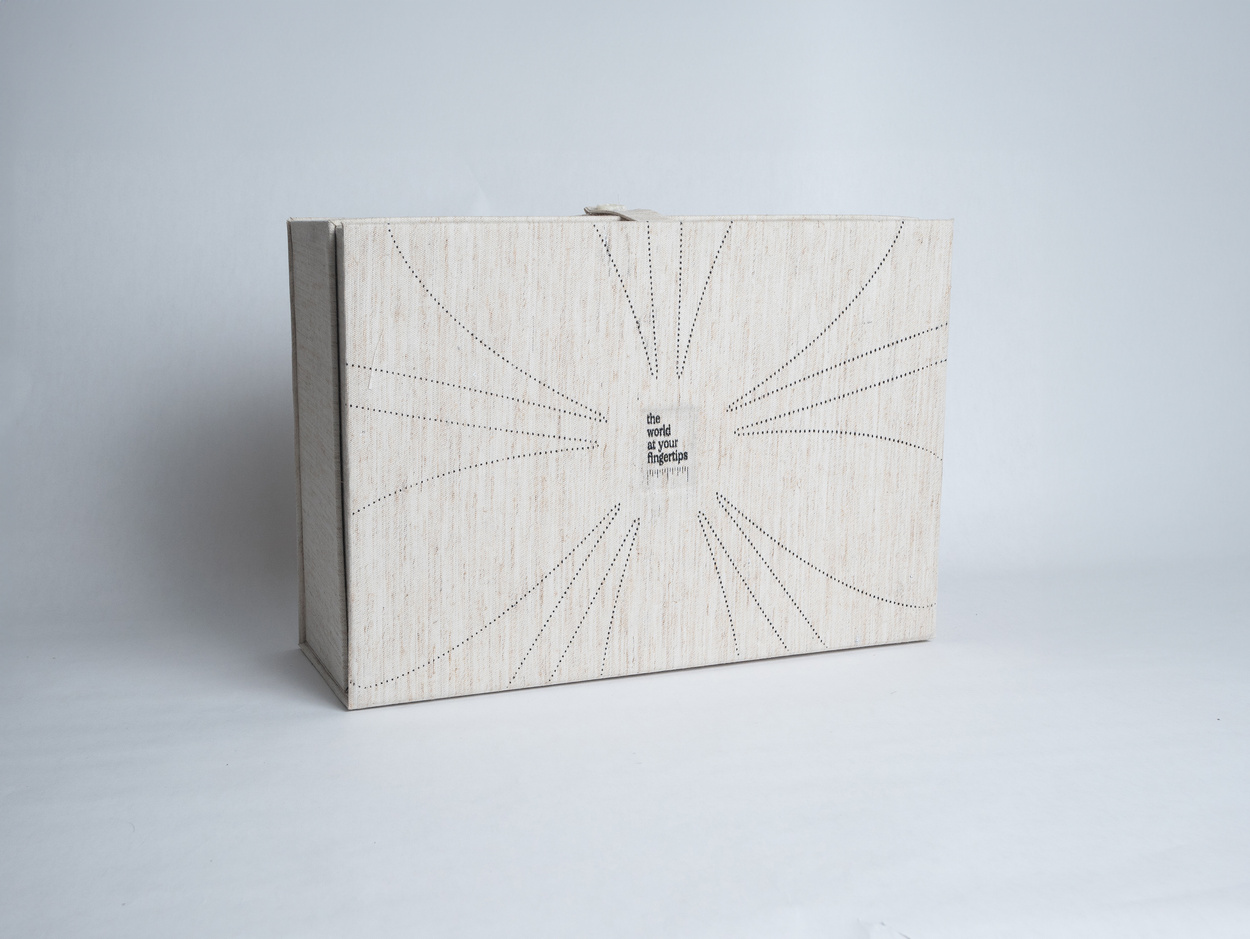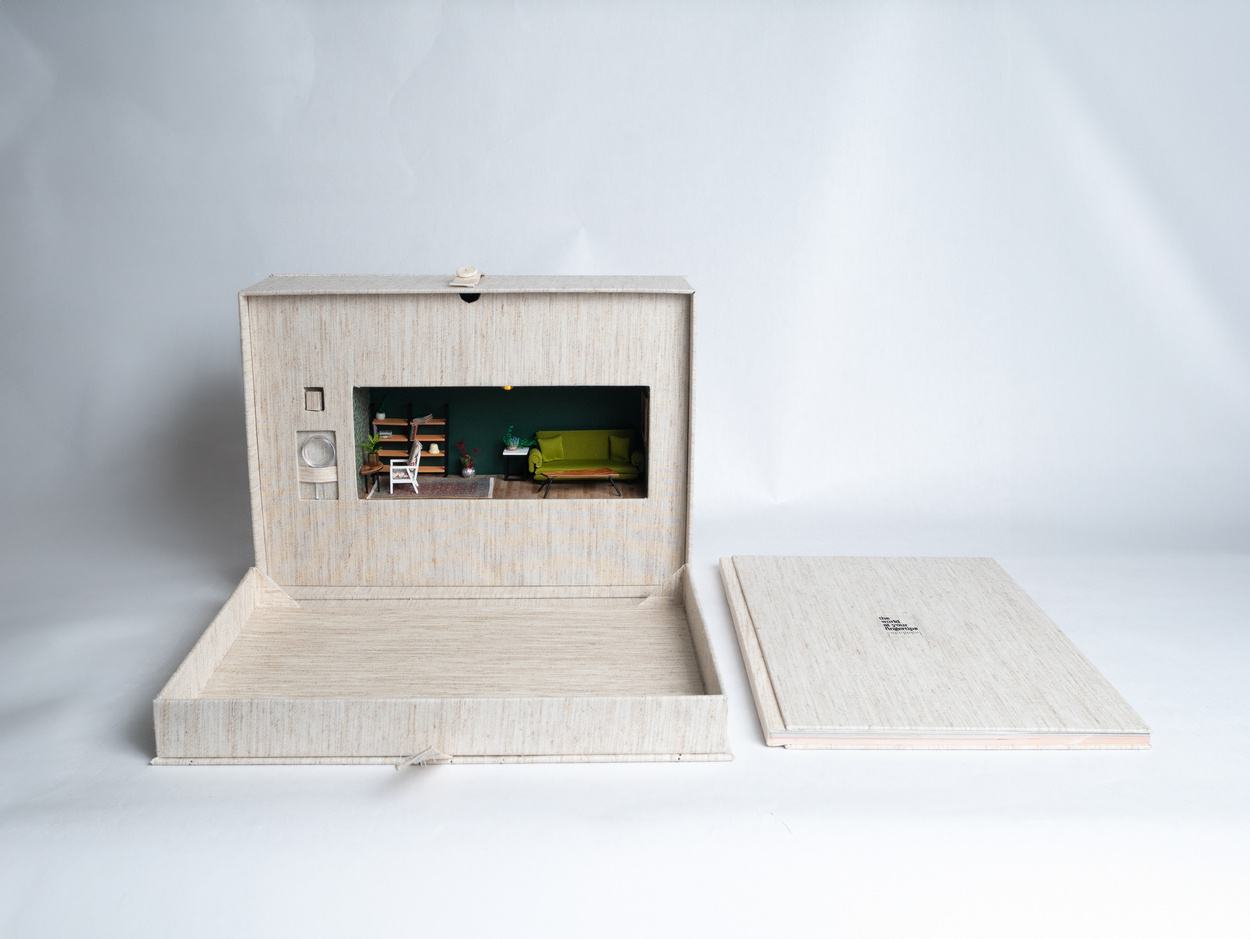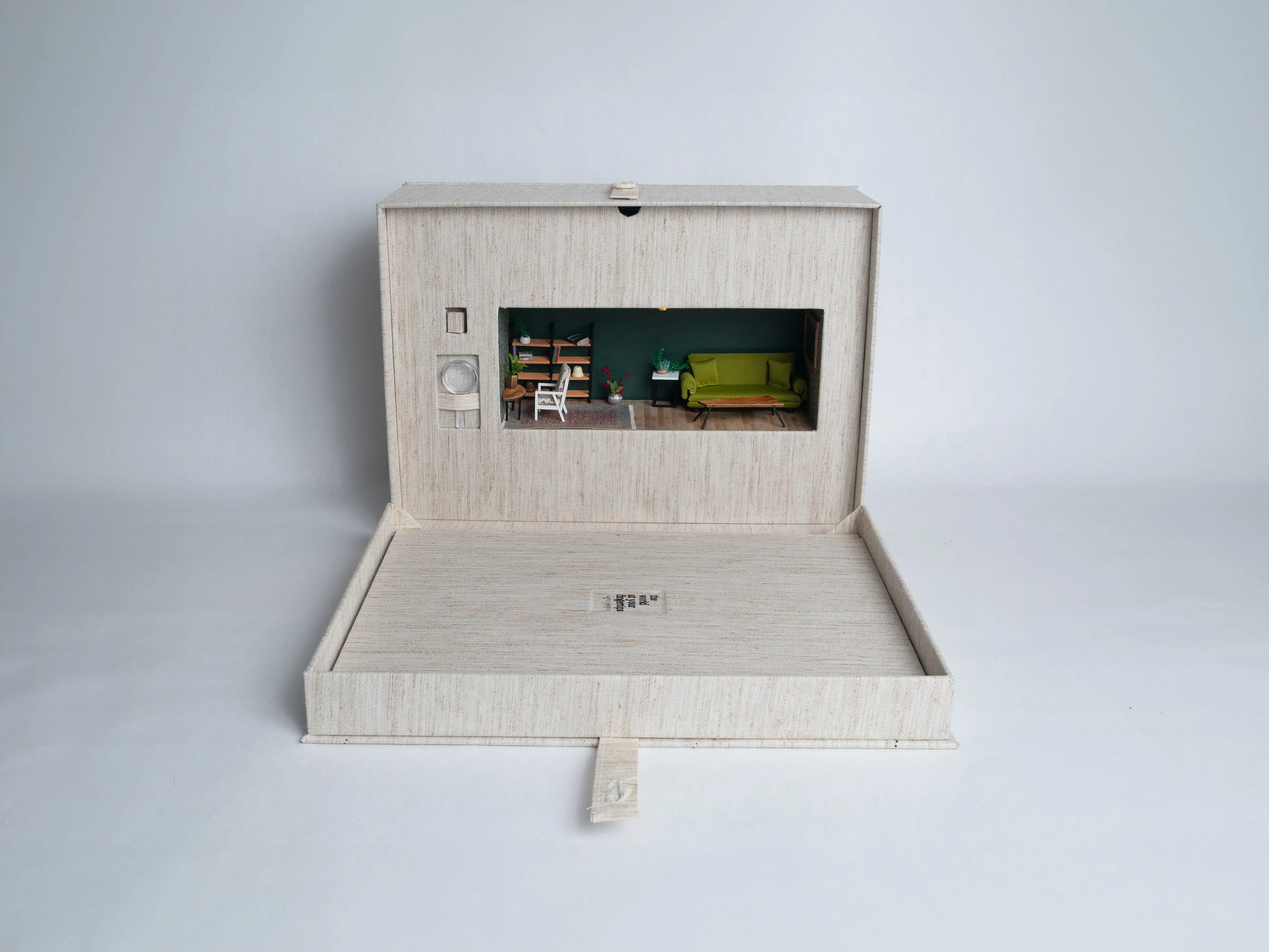
Box with book and miniatures

The World at Your Fingertips


Book Design
01/24–04/24 (4 months)


Advisor

Amy Auman

My Capstone project focuses on miniatures, or the small scale replicas of real-life objects, particularly those who practice it as a hobby or small business.

I was initially attracted to the topic as a life-long maker. From pursuing a creative education to partaking in crafty pastimes, I have found a deep appreciation for those who fully throw themselves into their passions.

Exploring the miniature community allowed me to not only learn about a different kind of maker, but also play with the physicality of the practice through a multi-part capstone. My Capstone ultimately manifested itself into two main parts: a box with an interactive miniature experience and a book detailing community and individual practices.


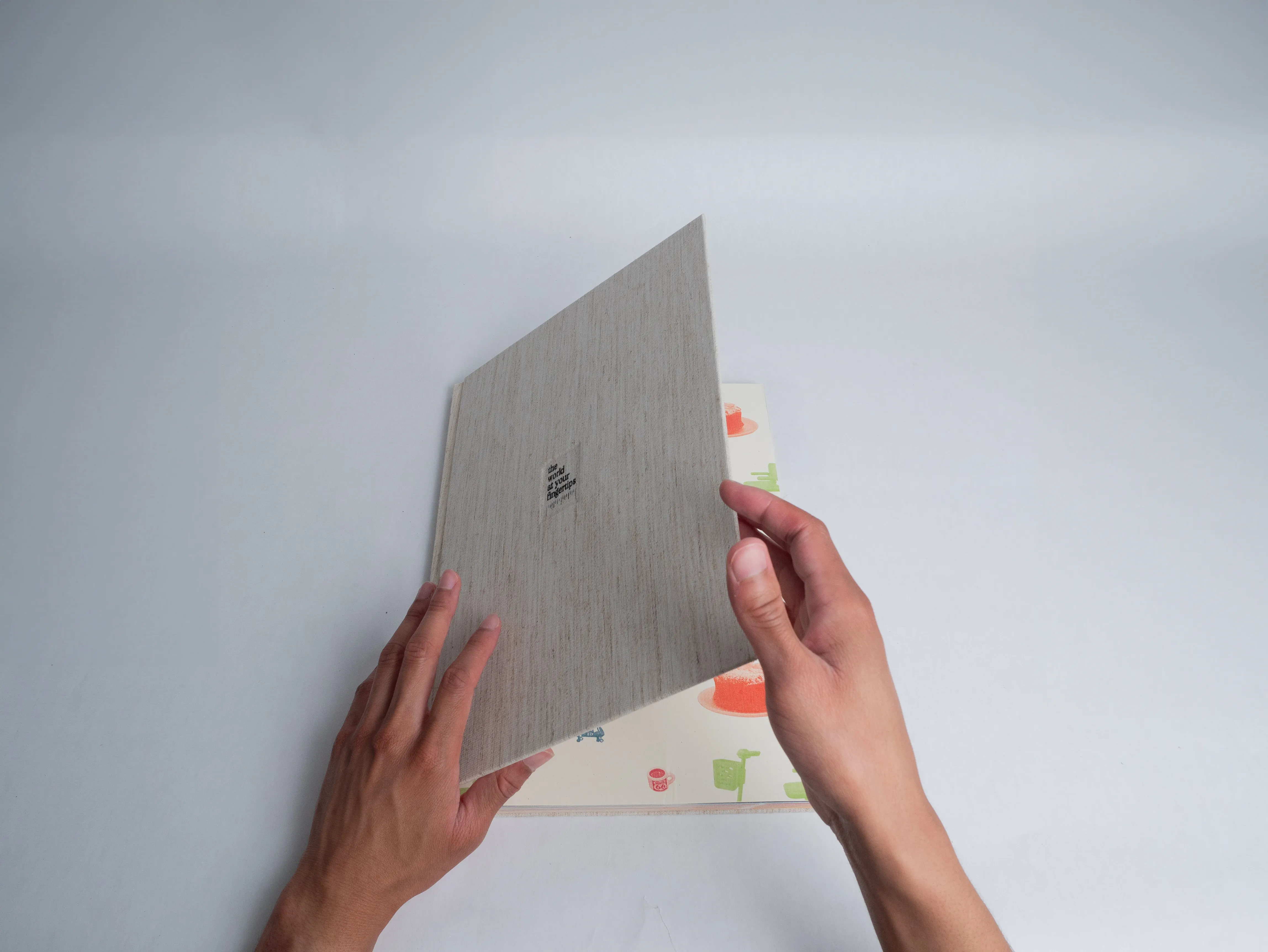
Hands opening large book

From the beginning, I strove to create a multi-part capstone as a culmination of my interests during my time at WashU.

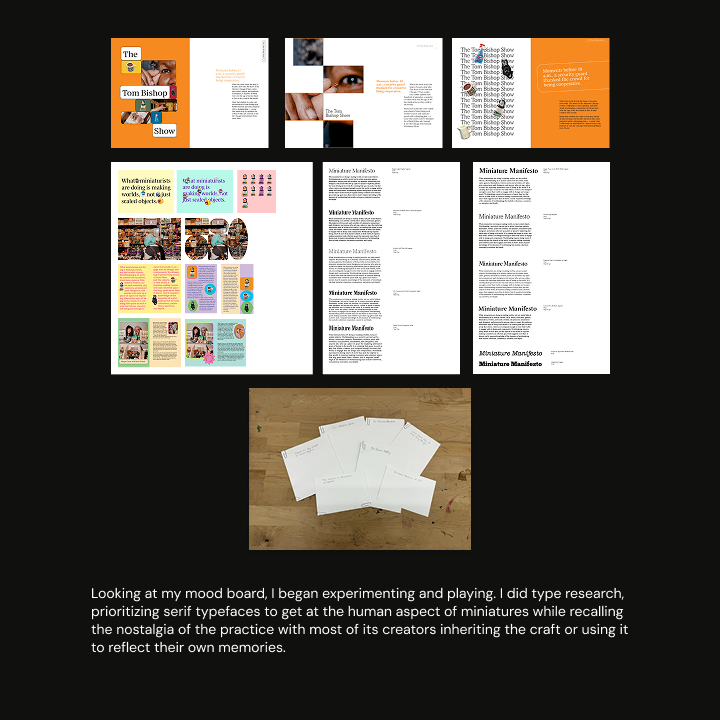
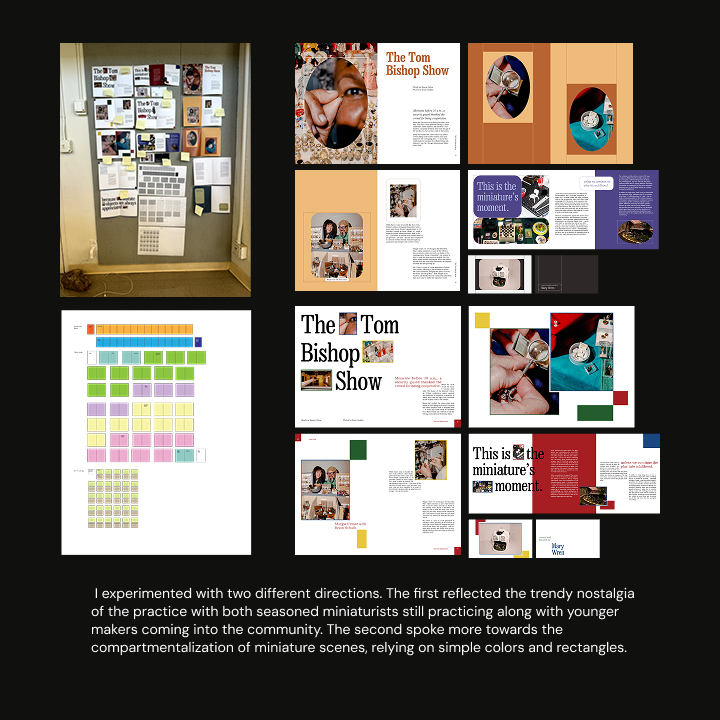
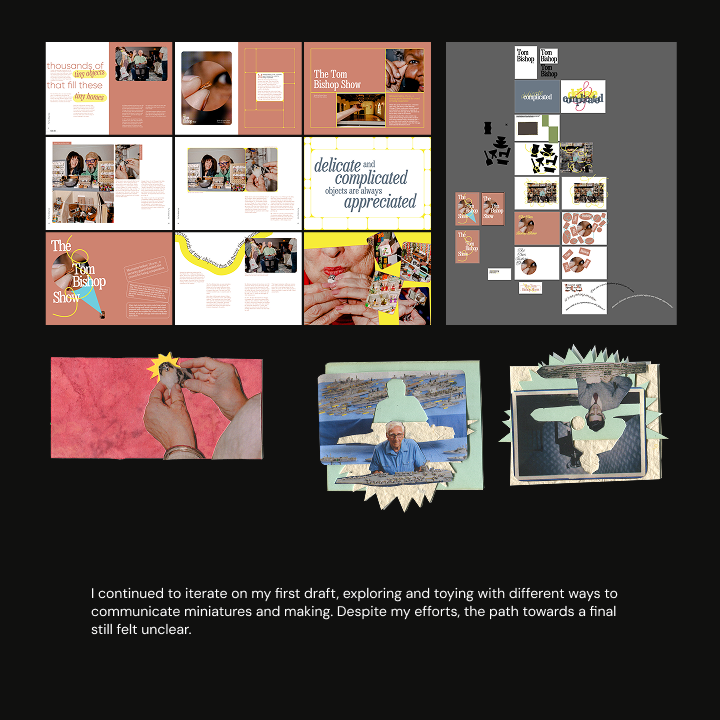
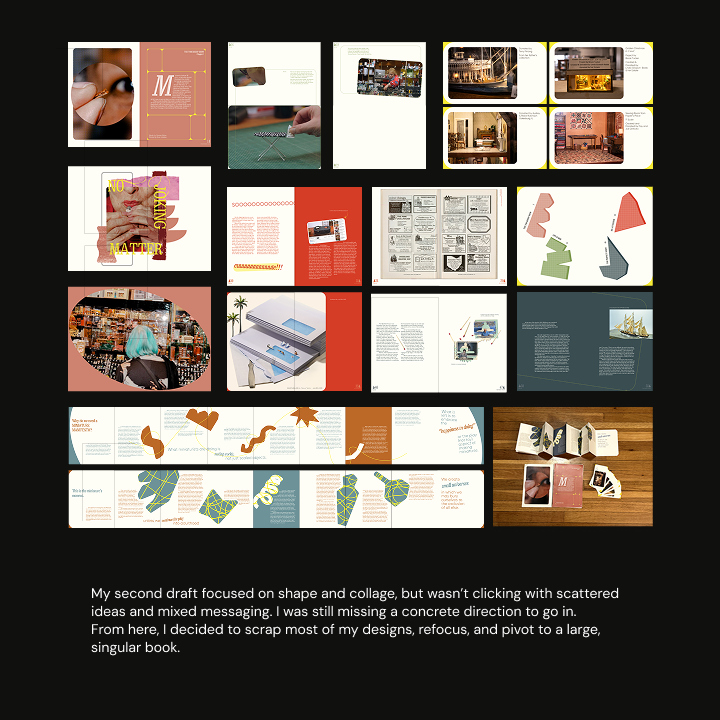
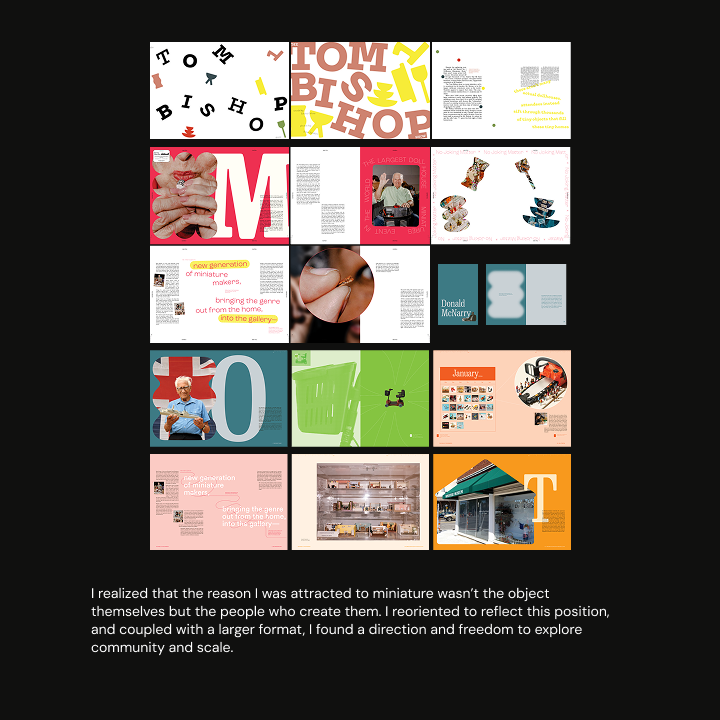
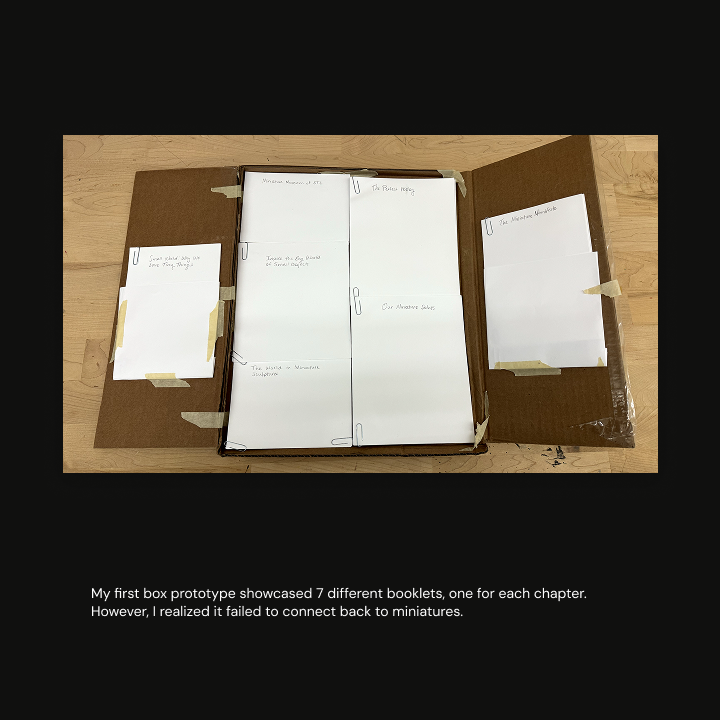
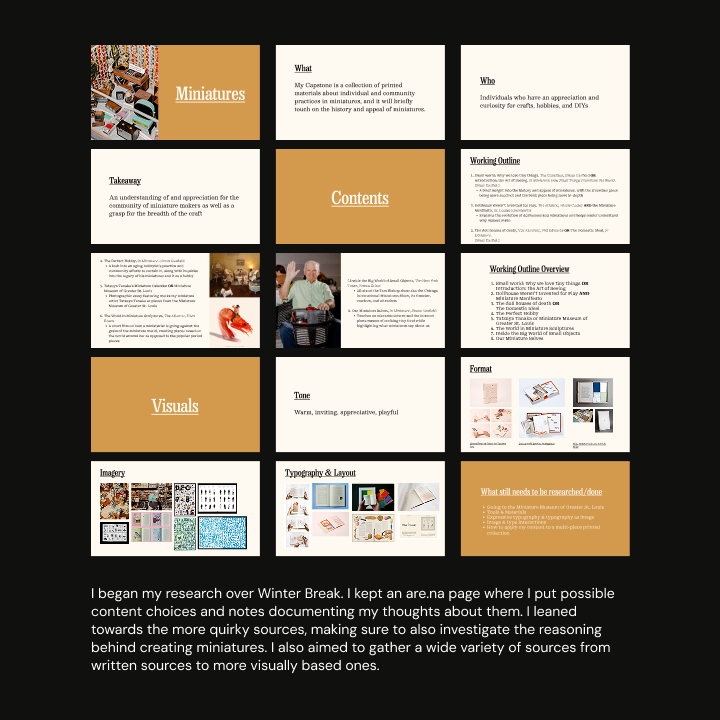
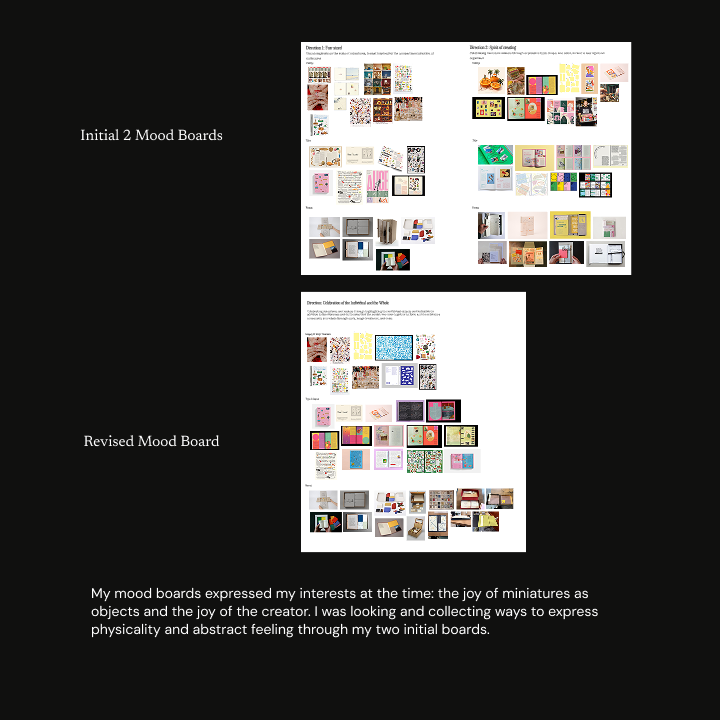
However, I struggled figuring out how to best approach this. Initially, I had 7 different booklets, one for every chapter. I realized that this was spreading everything very thin, so I narrowed it down to only 3 printed materials: one main book, an accordion book, and a set of cards. My design system focused on nostalgia and the compartmentalization of the miniatures similar to dollhouses and room boxes.

As I worked, I kept getting tripped up designing for multiple surfaces, causing me to question if this was the most efficient solution. Coming to this realization caused me to pivot hard to a singular large book where I was able to fully explore the real reason why I was initially attracted to the topic: the community and individuals who make the miniature world so enriching.
1 / 8
Step 1 of book process
2 / 8
Step 2 of book process
3 / 8
Step 3 of book process
4 / 8
Step 4 of book process
5 / 8
Step 5 of book process
6 / 8
Step 6 of book process
7 / 8
Step 7 of book process
8 / 8
Step 8 of book process

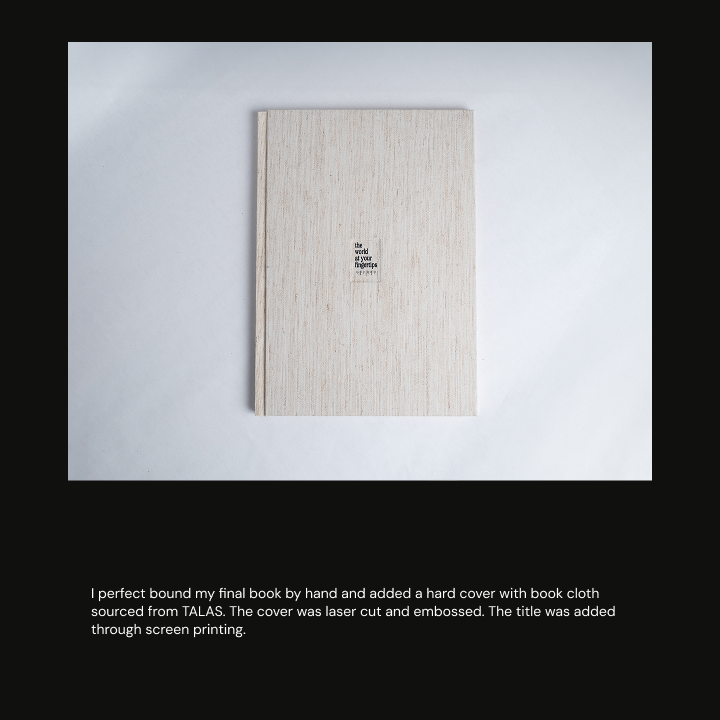
A large book seemed comical for such tiny subject matter.

The book is split into three unofficial sections: the introduction, main chapters, and concluding photo essay.

In the introduction, I contrast two opinions explaining why people create miniatures.

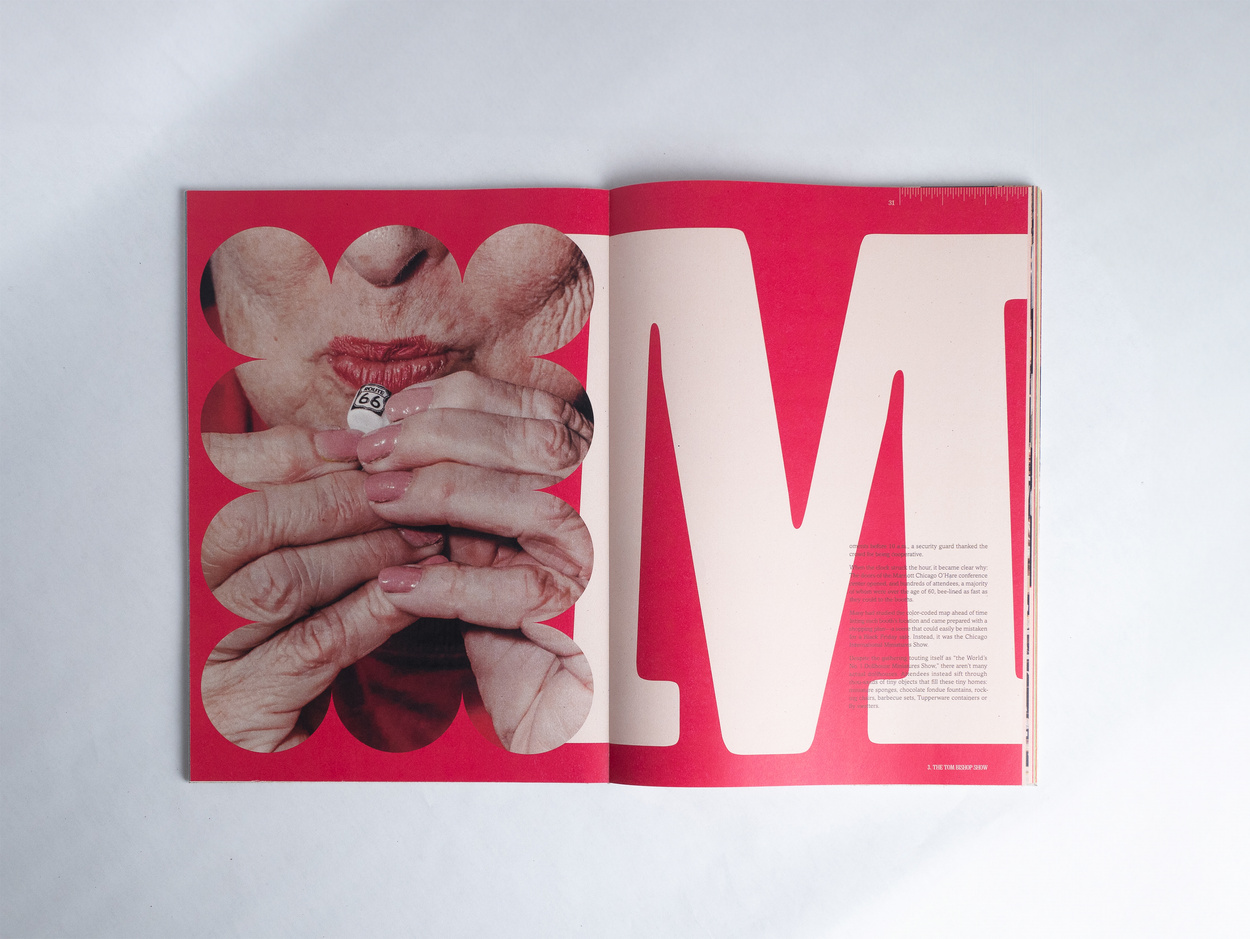
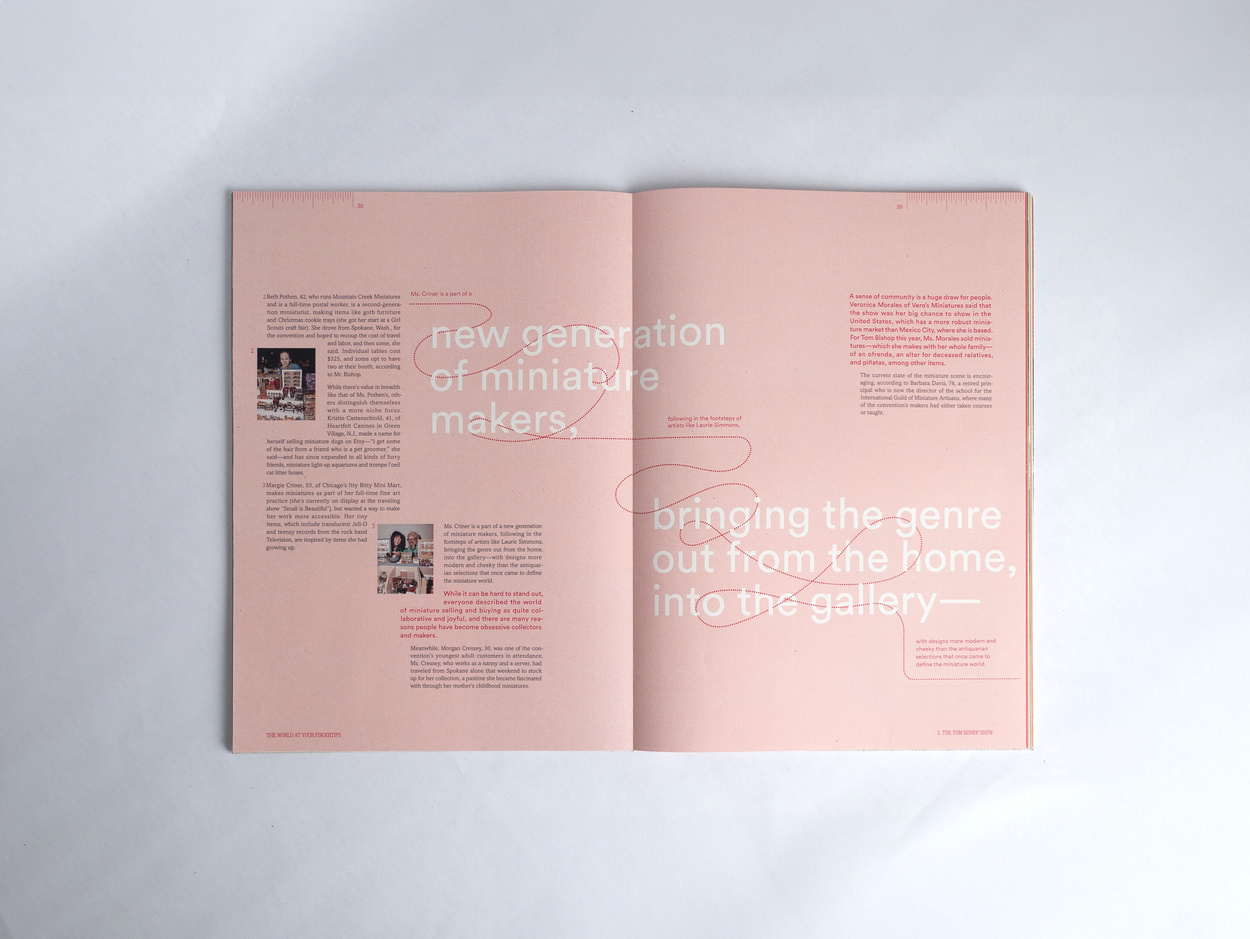
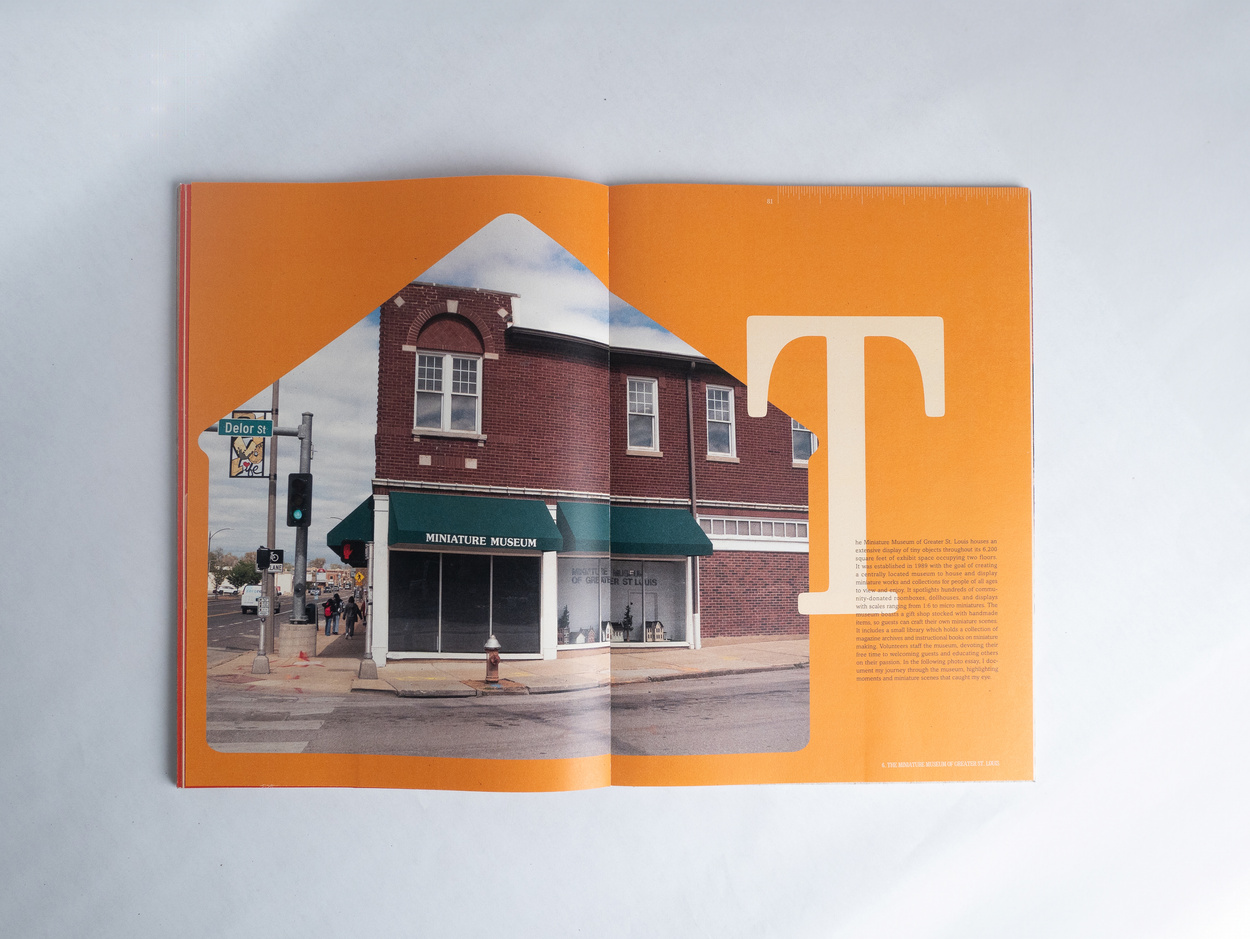
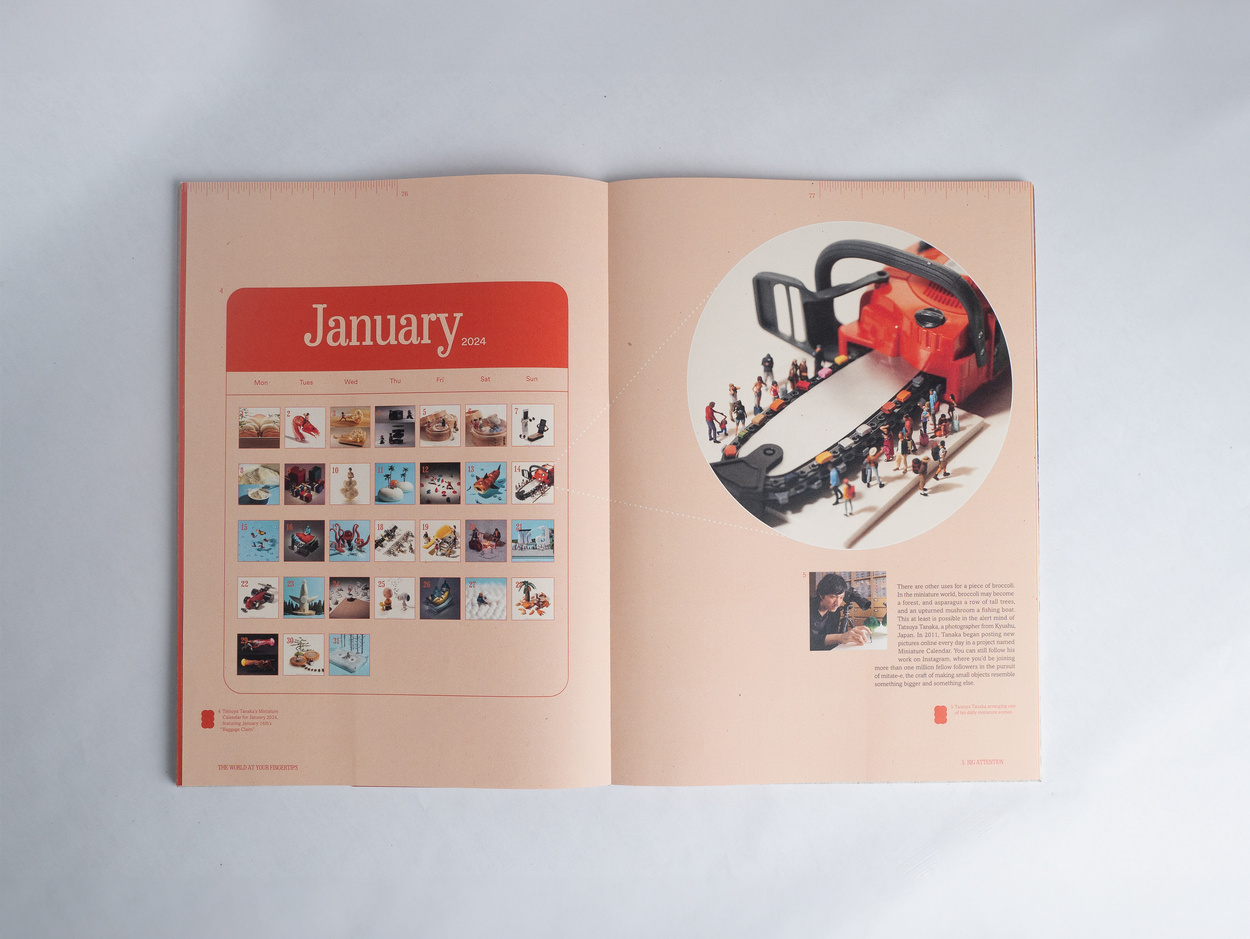
The main four chapters feature stories of community and individuals. They are visually delineated through distinct openers featuring large drop caps and fun-shaped frames highlighting an image related to the content.

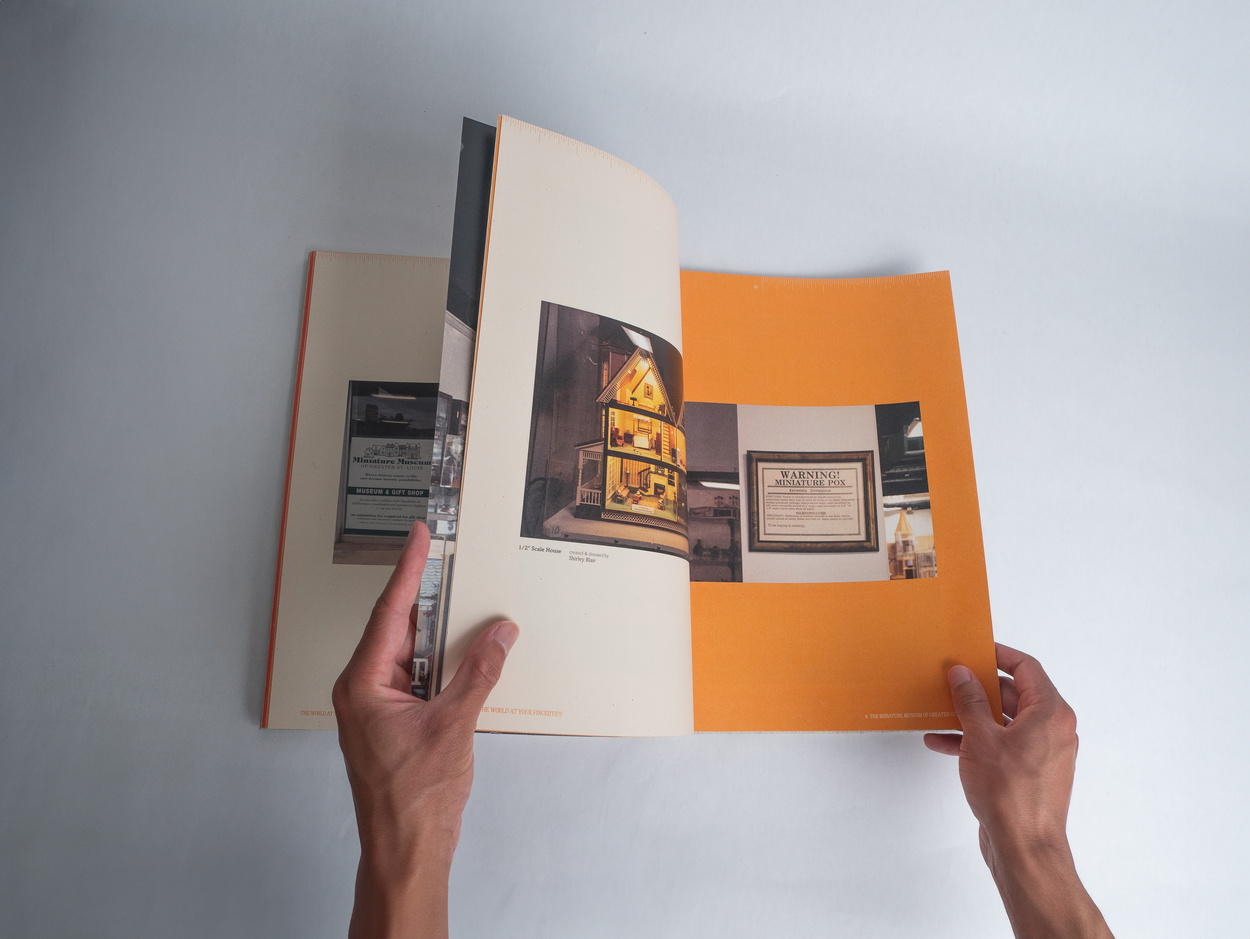
The book concludes with a photo essay that I photographed at the Miniature Museum of Greater St. Louis to explore local makers’ creations and their legacy. It details a journey throughout the main areas of the museum: the first floor gallery, second floor gallery, and gift shop & library.

1 / 7
Hands flipping through book
2 / 7
Book spread with big M
3 / 7
Pink book spread
4 / 7
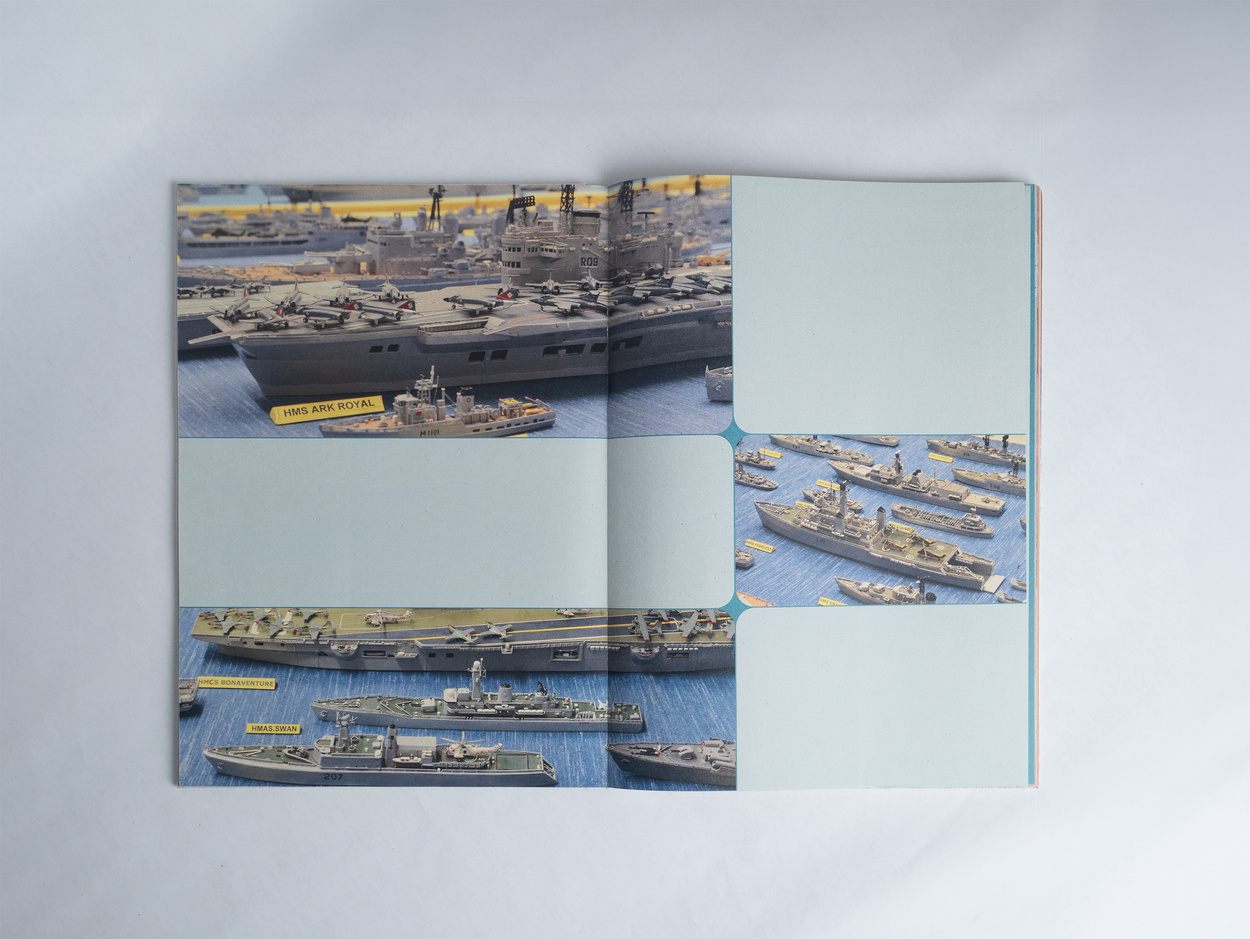
Book spread with miniature ships
5 / 7
Book with big T and Museum picture
6 / 7
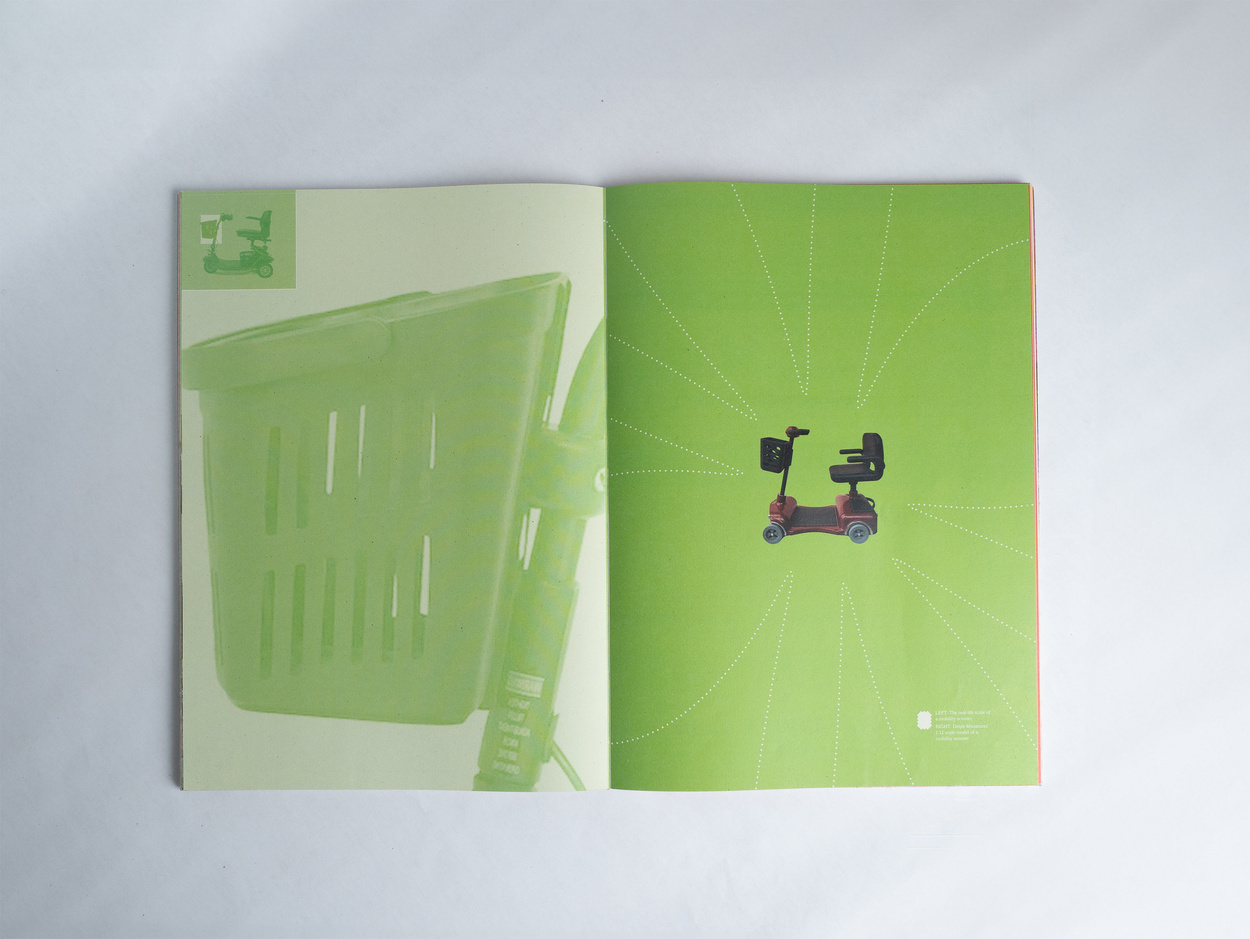
Book spread with green background and scooter
7 / 7
Orange book spread with calendar and chainsaw
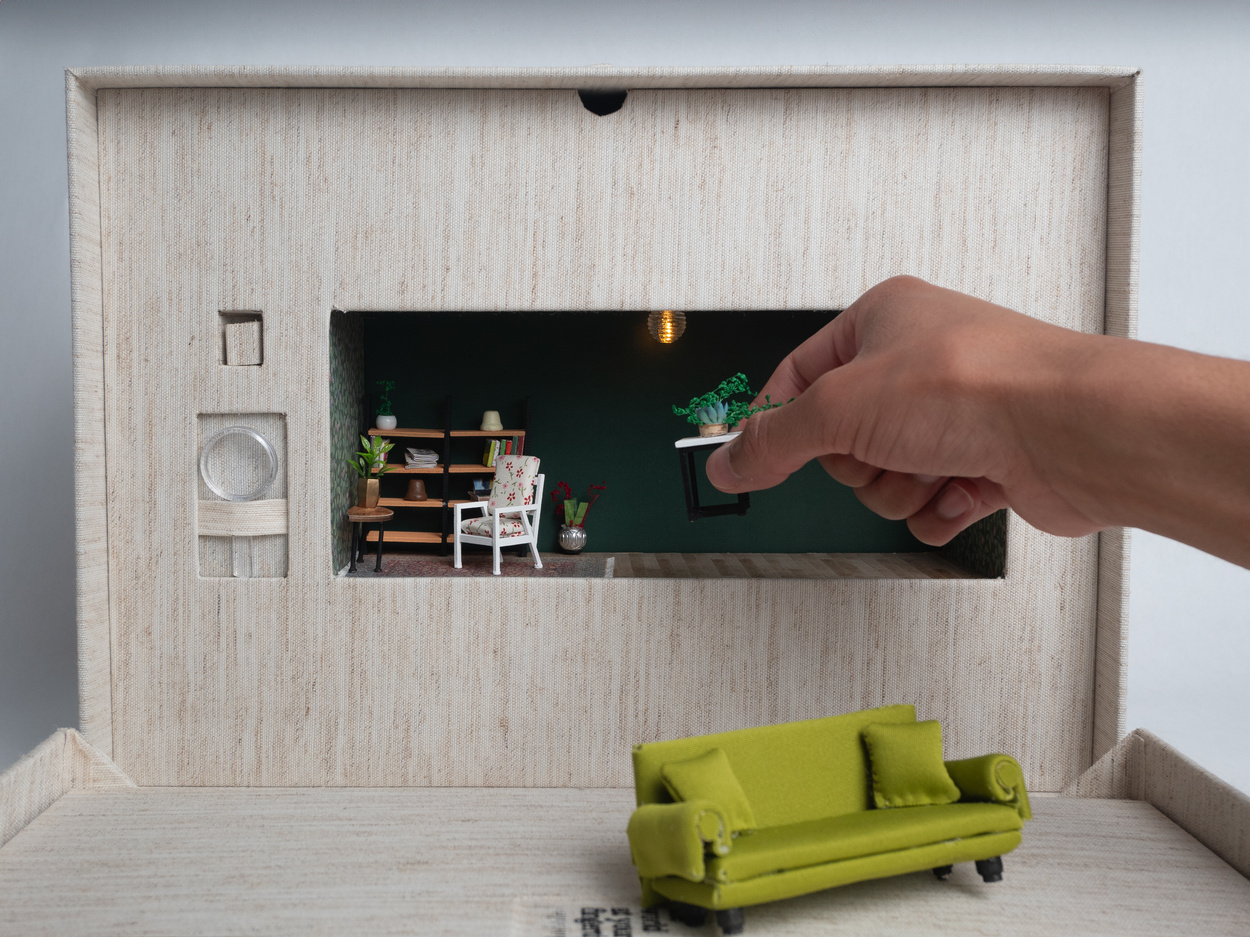
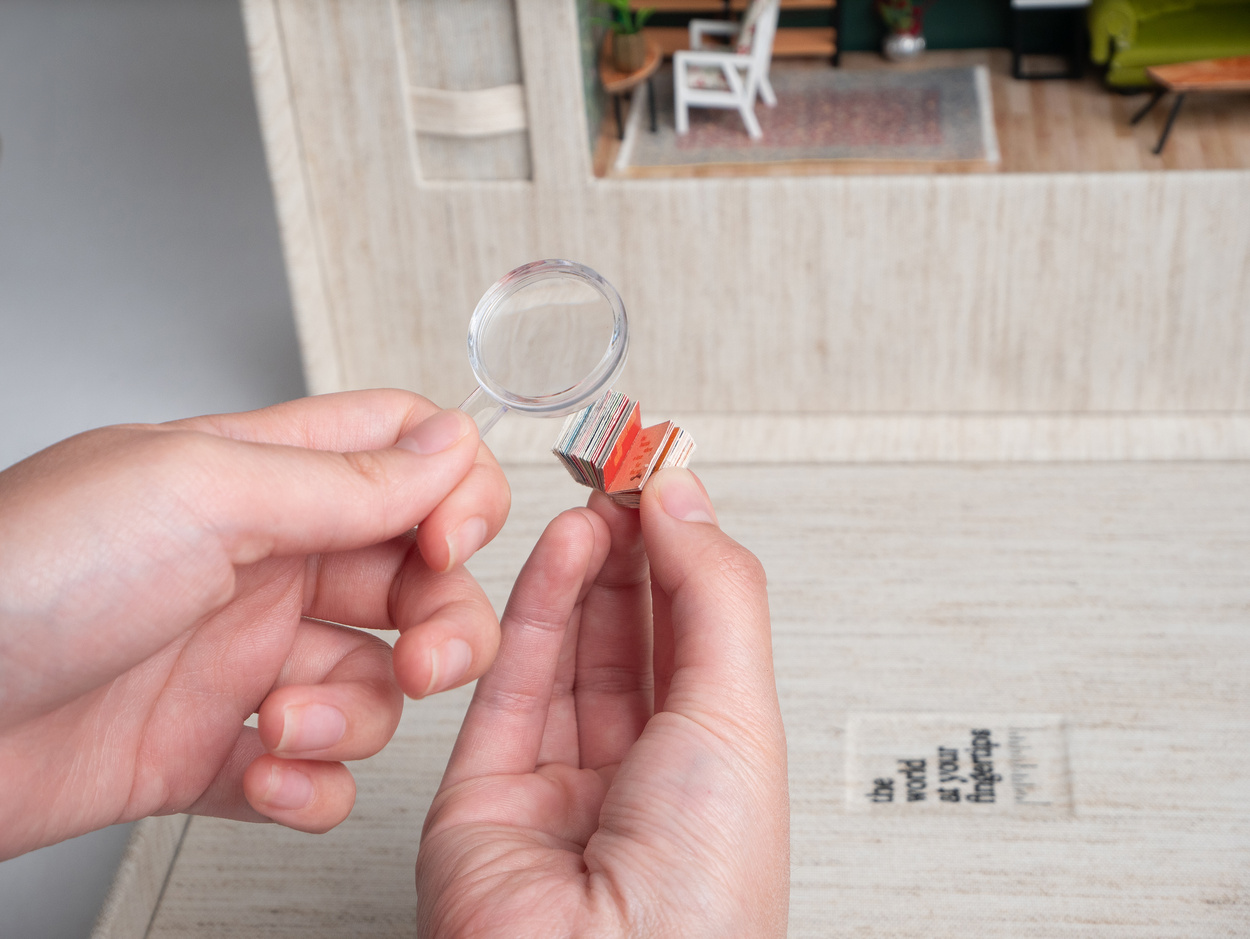
Hands grabbing miniature

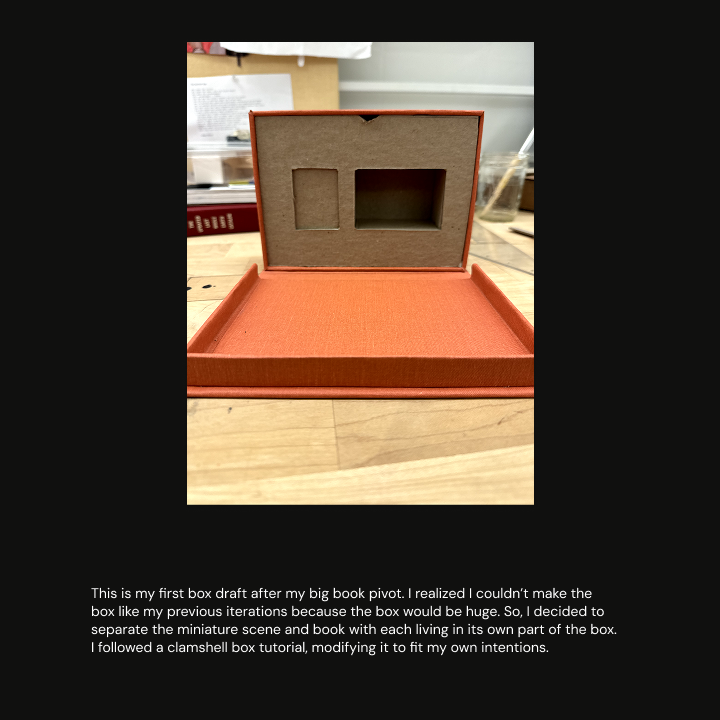
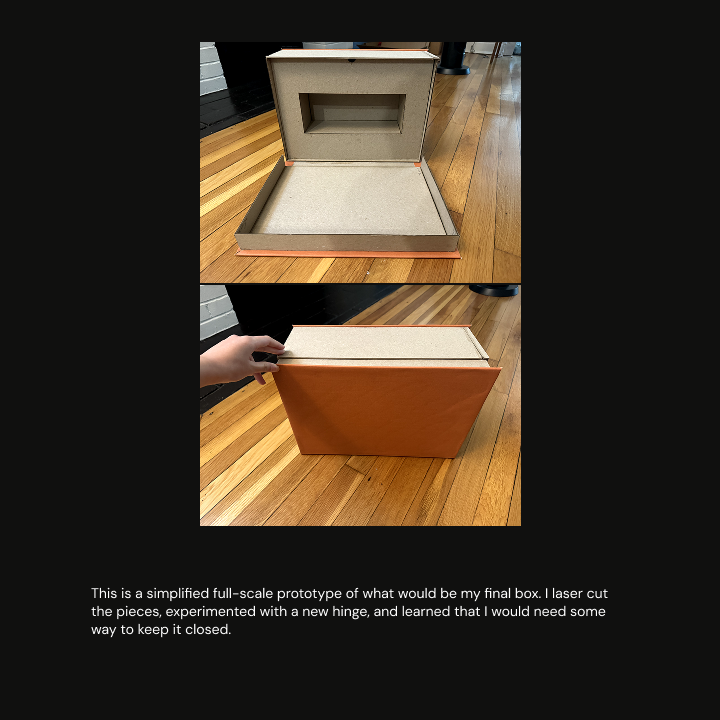
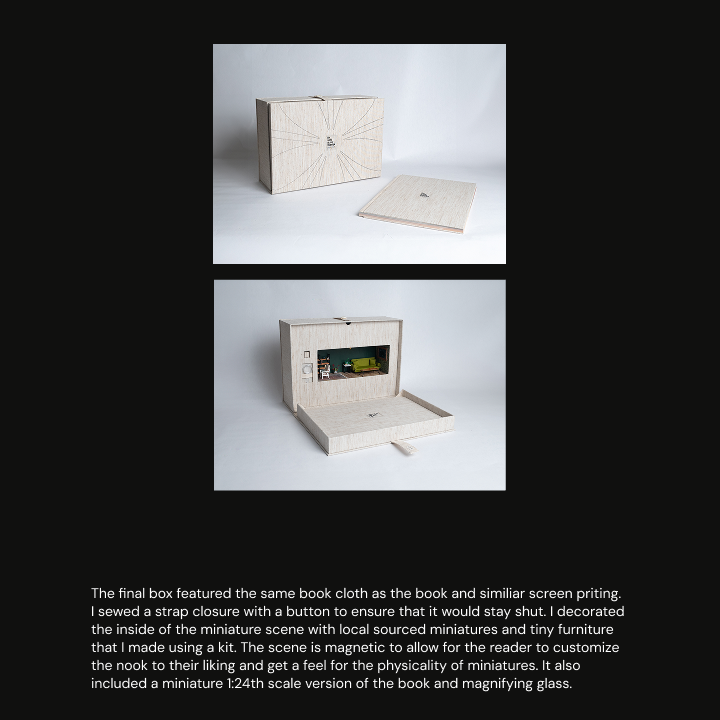
Each of the iteration of my boxed focused on the idea of a Capstone in parts, showcasing the spirit of miniatures.

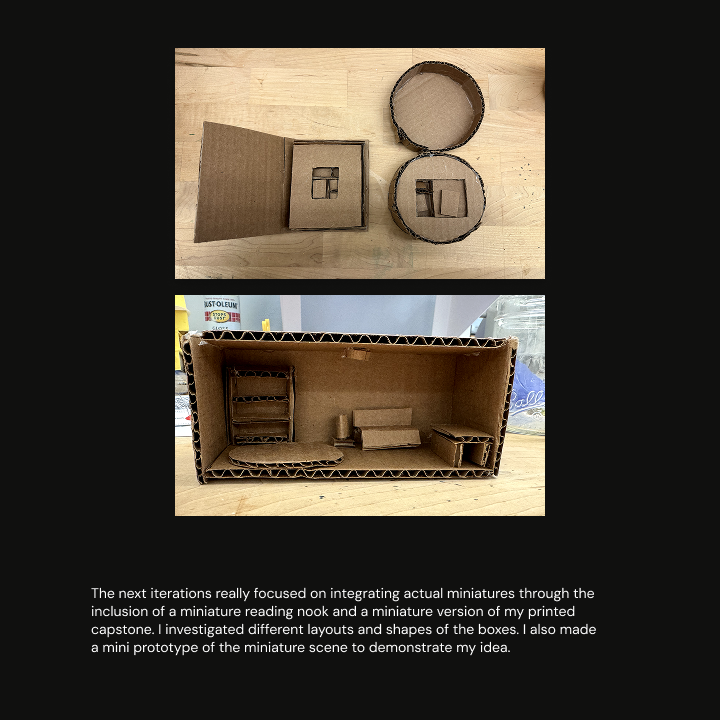
At first, I focused on showcasing the printed material through a series of booklets. I soon realized that the format didn’t really showcase the miniatures themselves at all, rather it created a barrier between what the content was about and the reader. In the next iterations, I decided to integrate actual miniatures into my project.

1 / 5
Hands flipping through book
2 / 5
Book spread with big M
3 / 5
Pink book spread
4 / 5
Book spread with miniature ships
5 / 5
Book with big T and Museum picture
1 / 5
Hands flipping through book
2 / 5
Book spread with big M
3 / 5
Pink book spread
4 / 5
Book spread with miniature ships
5 / 5
Book with big T and Museum picture

this website was coded by krissy ♥, last updated March 2026